
ICAS
The not-so-soft skills shaping accountancy
Executive director of learning at the Institute of Chartered Accountants of Scotland (ICAS) Cat Devaney explains why soft skills are critical to the role of the accountant.
When we think about the skills accountants need, it is often the technical ones that come to mind first. But applying that knowledge in practice calls for a much broader range of capabilities that go far beyond the numbers.
Accountancy is not just about producing and understanding complex financial information. The real skills lie in interpreting that data in context, asking the right questions and then communicating what it means to help inform business decision-making. Doing this effectively requires curiosity, critical thinking and professional judgement, alongside the ability to listen, adapt and understand different perspectives.
These capabilities are commonly known as “soft skills”, yet this term understates their importance. The word “soft” implies they are secondary, carrying less weight or power than technical expertise, when in reality they are vital professional skills that enable accountants to translate their knowledge into impact.
ICAS’ Society First research, part of our Shaping the Profession project exploring the future of accountancy, emphasises the value of this wider skillset. While 81% of the UK public view accountants as experts in their field, 70% also see them as trusted advisers. What drives that trust is particularly revealing. Respondents ranked honesty, acting in their best interests and feeling understood as the three most important drivers of trust, showing that maintaining the profession’s trusted status depends on much more than technical expertise alone.
So how do we make sure that learning and development continues to equip Chartered Accountants (CAs) with these vital “soft skills” as their careers, roles and the profession evolve?
At ICAS, the answer starts with our CA qualification. Our syllabus has been specifically designed to reflect the changing needs of society and the profession, embedding future-focused topics including technology, data, sustainability and ethical leadership.
Alongside this, our teaching approach gives students opportunities to apply their knowledge through practical experience and business-focused case studies, while peer-to-peer learning encourages them to discuss different approaches, challenge their thinking and build confidence in communicating their ideas.
This matters because these capabilities can’t be nurtured from a textbook alone. You learn to communicate by communicating. Critical thinking develops when your assumptions are challenged, while professional judgement is honed through having to weigh information, consider different perspectives and decide what to do next. Creating opportunities to practice these skills as part of professional education helps students gain vital experience that they will draw on throughout their careers.
Employers have a critical role to play too. The workplace is where these capabilities are tested and strengthened in real-life situations. Establishing a culture where colleagues can ask questions, learn from others, take on new challenges and receive feedback can make a real difference to how their skills develop.
And the learning journey doesn’t stop at qualification. As CAs progress through their careers, the demands placed on them change. ICAS’ Continuing Professional Development (CPD) programme supports the need for ongoing development through a comprehensive range of courses, resources, training and specialist qualifications. “Soft skills” are a core part of our offering, with learning covering areas such as negotiation, relationship-building, networking and emotional intelligence. Our CPD also helps professionals keep pace with evolving areas of modern business through the 'Professional Skillset', our series of standalone courses covering sustainability, innovation and data analytics.
This career-long development is essential in a profession that never stands still. We can’t predict exactly what technologies, challenges or expectations CAs will face in the years ahead. But we can prepare them to adapt to change, to question what they see, exercise ethical judgement and communicate in ways that bring others with them.
That is what future-ready learning and development should achieve: giving CAs the confidence and capability to keep adapting and making an impact as their roles transform. Technical expertise will always sit at the heart of accountancy, but its value is realised through how people apply it, challenge it and communicate it.
Perhaps it is time to retire the term “soft skills”. There is nothing soft about the skills that shape better decisions, strengthen trust, and help sustain confidence in our profession and economy.

Antonis Diolas
Head of Audit and Assurance with ACCA’s Policy & Insights teams, draws on extensive experience in auditing across different countries and industries to lead on ACCA’s global work on audit and assurance. He previously served as technical advisor at the IAASB and IFAC SMP Advisory Group.

Joe Fitzsimons
Leads ACCA policy work across Europe, Eurasia, the Americas, the Middle East and the UK. He was formerly a member of the policy team at the Institute of Directors, where he led across a range of policy areas including education and skills, EDI, and SME support.
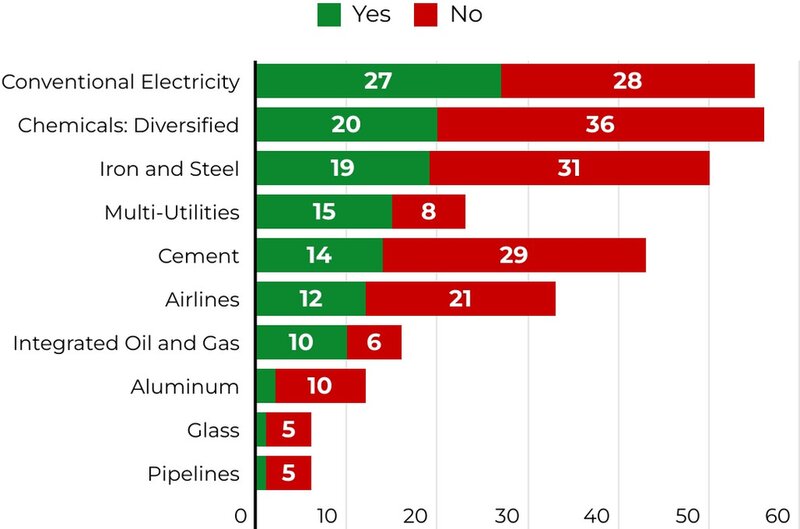
Engagement with carbon-related instruments are not concentrated in any subsectors.
Currently, there is no IFRS Accounting Standard or guidance dedicated to accounting for carbon-related instruments. Consequently, companies have had to develop their own accounting policies to account for these instruments as either assets, liabilities, income or expenses. As a result, several accounting treatments are observed across companies.
On the assets side, these instruments are most often accounted for as ‘intangible assets’, followed by ‘inventories’ and ‘financial assets’. Some companies presented these instruments as ‘other assets’. Further, these instruments are measured at cost or at fair value (or a combination of both approaches). Some companies do not disclose their measurement approach at all. On the liabilities side, some companies recognise provisions on a gross basis, while others do so on a net basis.
The size of these instruments, as a percentage of total assets or revenues, varies considerably among companies without being significant for all companies. This indicates that the instrument’s magnitude is not the sole determinant for recognition and disclosure in the financial statements. Nevertheless, there is room for improvement to provide information in the financial statements about these instruments’ nature, function, intended use, useful lives, amounts and accounting policies to help users understand their relevance and financial effects on the company.
Relatively few auditors’ reports discuss issues around carbon-related instruments. Those that do tend to discuss issues relating to the exercise of judgement or the use of assumptions, such as accounting for carbon-related instruments, measurement of these instruments, impairment tests for assets, and changes in accounting policy.

It’s about keeping employees interested in the firms they work for and retaining good talent so that they can continue to grow with, and add value to, the company. After investing in the skills to develop good people, we want to strengthen work environments that keep them.

These skills include:
Applying professional scepticism and judgement - this is vital in sustainability assurance engagements – where practitioners are required to assess evidence critically. Given the immaturity of sustainability reporting, it is likely to be even more important in sustainability assurance, where subjective statements often form part of sustainability reports and may not be backed up with sufficient appropriate evidence.
Acting in accordance with ethical requirements - auditors are bound by the International Ethics Standards Board for Accountants (IESBA) Code of Ethics for Accountants or by a local equivalent Code of Ethics and are regulated via their professional bodies. The ethical requirements and fundamental principles can foster trust when undertaking sustainability assurance engagements. Sustainability assurance providers may come across ethical dilemmas where experience gained from undertaking financial audits is relevant and helpful. While the nature of the ethical dilemma may be different, in the context of a sustainability assurance engagement, the fundamental principles of integrity, objectivity, professional behaviour, confidentiality, professional competence and due care that auditors shall follow are still relevant and applicable. The IESBA Code newly developed part 5 introduces provisions specifically for sustainability reporting and assurance and can be applied by sustainability assurance practitioners irrespective of background.
Quality management - To promote confidence and comparability, sustainability assurance providers should be subject to equivalent requirements for quality management — for example, adherence to the IAASB’s ISQM 1 framework — ensuring consistent standards of governance, ethics and performance across the profession.
Linking financial and sustainability information - The link between financial and sustainability information is of vital importance when providing assurance. Sustainability assurance providers with experience in financial audits are usually well placed to link the financial information that is reported in the financial statements with the information in sustainability reports. This helps them identify areas that could be more susceptible to misstatements. Additionally, their understanding of what is included in the auditor’s report can also provide them with further insights about areas that could be more susceptible to misstatements. For example, if the auditor’s report includes a key audit matter, and sustainability information relating to that matter is also reported in the sustainability report, then the assurance practitioner is likely to link the two and be more sceptical when designing the procedures to obtain sufficient appropriate evidence. This is especially relevant as the government wishes to ensure that investors have information they need to make informed decisions about the sustainability-related risks and opportunities that would reasonably be expected to affect an entity’s financial prospects. Therefore, any oversight regime should consider the communication between financial statement auditor and the sustainability assurance provider particularly in situation where a different firm is engaged to provide sustainability assurance.
Completing Continuous Professional Development (CPD) – second paragraph – ‘This is also why we launched our ground-breading, agenda-defining ACCA Professional Sustainability Diploma [Nov 2024]. The diploma is a world-leading qualification that equips accountants with the knowledge and skills they need to serve as experts and leaders in sustainability – including reporting and assurance, ethics and strategy.
This is also why we launched our ground-breading, world-leading, agenda-defining ACCA Professional Sustainability Diploma [Nov 2024]. The diploma is a world-leading qualification that equips accountants with the knowledge and skills they need to serve as experts and leaders in sustainability – including reporting and assurance; ethics and strategy.
There is a growing clamour across business for professionals who can answer this demand – and the diploma offers rich fields of new opportunity for accountants to pursue fascinating, satisfying and rewarding career paths. One of the landmark developments in sustainability assurance is the publication in November 2024 of ISSA 5000 by the International Auditing and Assurance Standards Board (IAASB) for sustainability assurance engagements. ISSA 5000 aims to increase trust in sustainability reporting and reduce the risk of greenwashing. Sustainability reporting is increasing around the world as more countries make it mandatory, especially for larger businesses. ACCA supports the ISSA 5000 which sets the global baseline for sustainability assurance which is why earlier in 2025 we published – along with CA ANZ – a practical guide on materiality for professionals in applying judgement when planning and performing sustainability assurance engagements under ISSA 5000. It’s critical that assurance practitioners focus on the most significant aspects of sustainability reporting, which are most likely to influence the decisions of intended users.
One of the important stances that we have taken on providing sustainability assurance is that the burgeoning profession should be open to all. ACCA has long been supportive of a profession-agnostic approach, where both accountants and non-accountants are permitted to provide assurance services, provided there is a level playing field when it comes to quality management standards, ethics, regulation and oversight. This approach recognises the broad and deep expertise required for the diverse and technical topics covered by sustainability reporting. The primary goal is to ensure high-quality assurance, which requires expertise in both assurance techniques and the relevant subject matter, including its measurement and evaluation. This approach – not confining assurance providers to any particular profession or qualification – also aligns with developing international practices.
As a leading global body ACCA tries to be at the leading edge in developing the services and skills the profession requires to remain relevant and add value in an increasingly complex world. In our 2023 report, sustainability assurance -rising to the challenge, we looked at the evolution of corporate reporting and how investors would be increasingly reliant upon sustainability information. It is becoming increasingly important that investors can trust that information.
The report concluded that the accountancy profession, alongside other professions performing assurance engagements, is well placed to satisfy the unprecedented demand for sustainability assurance.
ACCA continues to work hard on two fronts: first to ensure that the accountancy profession has the sustainability skills the capital markets require, and secondly collaborating with others to ensure sustainability regimes across the globe are fit for purpose.
Auditors
Auditors should:
- check the coherence of information in the financial statements and the narrative part of an annual report, and
- lend their technical expertise to support the development of globally applicable guidance for consistent accounting treatment of carbon-related instruments, and to help ensure the resulting accounting and disclosure requirements are auditable.
See here for the full report.
Main image: Aaron Saw, head of Corporate Reporting Insights – Financial, ACCA
Main image: Cat Devaney, executive director of learning at the Institute of Chartered Accountants of Scotland (ICAS).